
Have you noticed mold returning even after cleaning it, only to find the same musty odors, stains, or moisture problems coming back again? Many Iowa Falls homeowners deal with recurring mold because the visible growth is often just a symptom of a deeper moisture issue hiding behind walls, under floors, or inside older building materials. Professional Mold Removal Services in Iowa Falls focus on finding the source of the problem, controlling the spread, and removing mold safely instead of providing temporary fixes that fail. In this guide, you’ll discover why mold keeps coming back, the common causes behind hidden growth, why DIY methods often fall short, and how expert remediation can help protect your property for the long term.
Why the 48-Hour Deadline Matters in Iowa Falls
Time is your biggest enemy when water gets into your home or commercial building. Fungal spores are naturally floating in the air all around us, just waiting for the right conditions to settle down and grow. Once those spores find a damp surface, they have a very short window of time to germinate and start spreading. If you leave water damage untreated for more than forty-eight hours, you give these spores the perfect head start they need to colonize your walls, floors, and ceilings. Acting quickly is the only way to stop a minor, cheap fix from turning into a major, expensive structural disaster that threatens your property value and your family’s health throughout the year.
How Fast Does Mold Really Grow?
Mold is incredibly efficient at reproducing in the right environment. As soon as moisture meets organic materials like drywall backing, wood, or carpet, the spores wake up. They begin to grow tiny, root-like structures called hyphae that dig deep into your building materials to digest them for food. Within two days, this process is usually well underway. This is why you must prioritize immediate action. Waiting even a few days can mean the difference between simple drying and a full renovation.
How Iowa Falls Weather Feeds Mold
Our local climate in Iowa Falls is a major factor in mold growth. We experience harsh, freezing winters followed by long, humid, and muggy summers. This extreme change in temperature puts a lot of stress on our buildings. When cold, damp air meets warm, moist air, it creates condensation. This moisture often builds up in places we cannot see, such as behind your walls or under your floors. This hidden humidity is the primary fuel for mold, making regular moisture checks an essential part of your building maintenance.
Is Your Old Iowa Falls Home Trapping Moisture?
Many people in Iowa Falls take great pride in owning beautiful, historic homes. These classic properties have immense charm, but they were built decades ago, long before we understood modern moisture control. These houses were originally designed to “breathe” through gaps in the wood and masonry. However, as we have updated these homes with modern materials, we have accidentally changed how they handle water.
If your older home has been renovated with modern upgrades, you might be trapping moisture inside your walls without realizing it. Understanding how your historic home functions with The Professional Touch is the first step toward preventing mold, protecting your investment, and keeping your living environment comfortable and safe for your family for many years to come.
Why Modern Insulation Can Cause Problems
Modern insulation is great for keeping your home warm, but it can cause issues if your home was not designed for it. When we add thick insulation to old plaster walls, we block the natural airflow that used to keep the wood framing dry. This trapped air often holds humidity, which then condenses on the cold studs behind your walls. Over time, this creates a dark, damp environment that mold loves. You need a professional assessment to ensure your insulation is helping your home, not hurting it.
Dealing with Iowa’s Wet Foundation Issues
Iowa Falls is near the river, which means we often deal with high ground moisture. Many older foundations are built from porous materials like stone or concrete blocks that soak up water like a sponge. When the ground around your foundation gets saturated from rain or snowmelt, that water is pushed into your basement. If you notice a musty smell or dampness in your cellar, it is likely because moisture is wicking up through your foundation walls. Fixing these leaks requires specialized knowledge, and ignoring them will lead to ongoing mold issues.

Spotting Hidden Signs of Water Damage
Often, mold is hiding right out of sight, growing quietly behind your finished surfaces. You might not see the mold at first, but your building will leave clues if you know what to look for. For commercial building managers, catching these signs early is the best way to prevent building-wide air quality issues that can affect your tenants. For homeowners, it is the key to preventing extensive structural damage. By learning to identify the subtle warning signs of moisture, you can take control of your building’s health before a small leak becomes a massive headache. Staying proactive with these simple checks is the best way to save your property from expensive repairs.
Signs in Commercial Spaces
In commercial buildings, look for warping under breakroom sinks or bathroom vanities. These cabinets are often made of wood that will swell when it gets wet, giving you a clear warning sign long before you see mold. Also, check your ceiling tiles for water stains or sagging. In busy office buildings, shared ventilation systems can spread spores quickly. If you notice a faint, earthy, or musty odor in common areas or near your HVAC units, it is time to have a professional inspect your air ducts and utility rooms for hidden dampness.
Signs in Residential Homes
In your home, keep an eye on your baseboards and carpet tack strips. If you see signs of rust or discoloration along the floor, it means moisture is traveling up through your concrete slab. You should also watch for bubbling paint or wallpaper in your basement or near exterior walls. These are signs that moisture is trapped behind the finish. If you feel cold spots on your interior walls, that is often a sign of condensation, which is a major red flag. Catching these small, physical indicators early is the best way to avoid a huge cleanup job.
Why DIY Mold Cleanup Usually Fails
When people see mold, their first instinct is to grab a bottle of bleach and scrub the wall. It makes sense, right? Bleach is a common cleaner, and it seems to make the surface look clean again. However, this is one of the biggest mistakes you can make. Bleach is designed for hard, non-porous surfaces like plastic, tile, or metal. When you use it on porous materials like drywall, plaster, or wood framing, it just doesn’t work the way you think it does. The surface might look better, but the root problem remains, and your DIY fix will likely lead to even worse mold growth in the future.
The Truth About Using Bleach on Mold
Bleach is mostly made of water, and it cannot penetrate deep into porous materials. When you spray it on wood, the bleach chemical stays on the surface, while the water in the bleach soaks deep into the fibers. This actually feeds the deep, microscopic roots of the mold, providing the hydration it needs to grow back faster and thicker. You are essentially watering the mold roots while cleaning the surface. This is why your DIY cleaning job seems to work for a week, only for the mold to return with a vengeance.
Why You Shouldn’t Paint Over Mold
Some homeowners try to cover up mold with “mold-resistant” paint. This is essentially a cosmetic fix that hides the problem rather than solving it. If you have a moisture leak, the mold will continue to grow behind that fresh coat of paint, slowly eating away at the wood and drywall backing. Eventually, the mold will cause the paint to bubble and peel, and you will have to deal with the same mold all over again, plus the added cost of fixing the damaged wall. Always fix the underlying moisture leak first before attempting any type of cosmetic repair work.
When to Call Professional Mold Removal Services in Iowa Falls
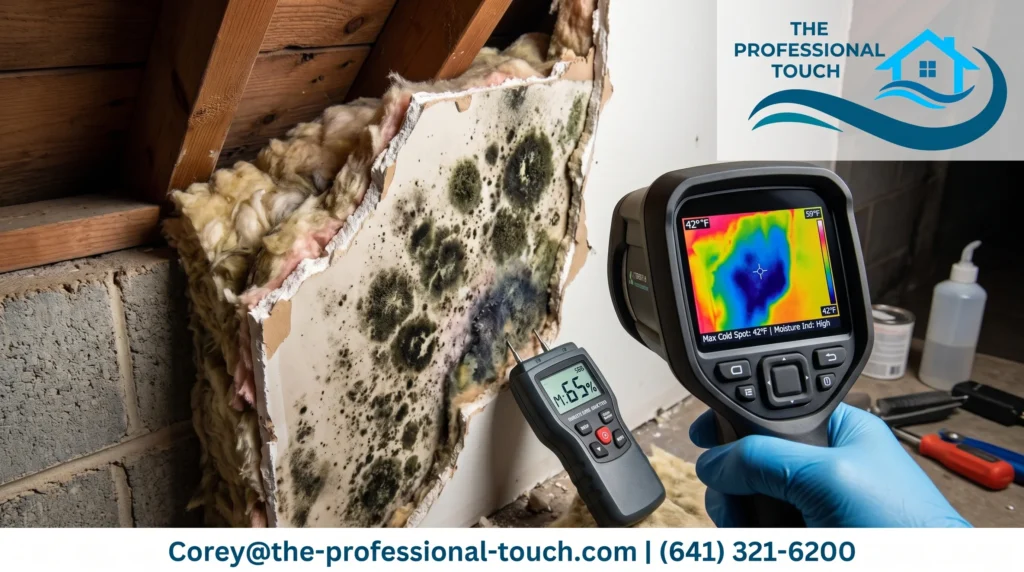
If you have a mold problem larger than a small, local patch, you need professional mold removal services in Iowa Falls. Professional restoration experts do more than just clean; they use scientific methods to identify the source of the water, contain the spores, and safely remove the contaminated materials. Using specialized equipment like infrared cameras and heavy-duty air scrubbers, we can ensure that the mold is gone for good and that your building is safe for everyone to use. We prioritize your health and your property’s structural integrity. By choosing a professional team, you are getting the equipment and the expertise required to handle complex moisture issues properly.
The Benefit of Using Professional Containment
When we work on a mold project, we use containment zones to keep your building safe. We build airtight plastic walls around the area to stop microscopic spores from spreading to clean parts of your building. Then, we use HEPA-filtered air scrubbers to create negative air pressure. This pulls the air into the contained zone and filters it, ensuring that no dust or spores escape into your hallways, offices, or bedrooms. This step is critical because standard cleaning can actually spread spores into the air, causing them to settle in new areas and create even more problems.
Why Air Testing Keeps Your Building Safe
A mold remediation project isn’t truly finished until we can prove the air is clean. We don’t just rely on how the room looks; we use independent, third-party air testing to verify our results. We compare the air quality inside the workspace to the air quality outside your building to make sure the spore levels are normal and safe. This scientific verification gives you the objective proof you need to know that your building is healthy again. Whether you are a commercial manager or a homeowner, this step gives you the total peace of mind you deserve.
Conclusion
Mold problems rarely disappear on their own because the visible growth is often connected to a deeper moisture issue. As discussed, Iowa Falls homes and businesses can face mold challenges caused by humidity, foundation moisture, water damage, and hidden leaks. While DIY cleaning may provide a temporary improvement, professional Mold Removal Services in Iowa Falls bring The Professional Touch by focusing on identifying the source, containing the spread, removing affected materials, and restoring a healthier environment. Proper inspection, advanced equipment, and professional remediation methods help prevent mold from returning and protect your property from long-term damage.
If you suspect mold growth or ongoing moisture problems in your home or business, don’t wait for the issue to get worse. Call us today for reliable mold removal services in Iowa Falls and get expert help restoring your property.