
If you’ve caught a musty smell coming from your basement, spotted dark spots creeping along a bathroom ceiling, or you’re recovering from a spring flood along the Iowa River, you’re probably not just curious about mold anymore. You want to know how bad it is, what it’s going to cost, and who in Iowa Falls can actually fix it. That’s exactly what this guide covers.
Mold remediation in Iowa Falls is a bigger deal than most homeowners realize until they’re facing it. Between the humid Iowa summers, the older housing stock throughout Hardin County, and basements that were never designed with modern vapor barriers, this region gives mold plenty of opportunity. The good news is that mold problems are almost always solvable once you understand what remediation actually involves and what a fair price looks like.
What Is Mold Remediation?
Mold remediation is the process of identifying, containing, removing, and preventing the return of mold growth inside a building. It’s different from simply wiping visible mold off a wall with bleach. Real remediation involves locating the moisture source causing the growth, containing the affected area so spores don’t spread to clean parts of the home, physically removing contaminated materials, treating the surfaces that remain, and then verifying the air quality and surfaces are clear before the job is called done.
The Environmental Protection Agency draws a clear line here: cleaning a small surface patch of mold is a DIY-friendly task, but anything covering an area larger than about 10 square feet, or mold tied to a water intrusion event like flooding or a burst pipe, calls for a trained remediation professional. That’s because disturbing mold without proper containment can actually make an air quality problem worse by releasing spores throughout the house.
In practical terms, remediation is not one task. It’s a sequence: inspection, containment, removal, treatment, and prevention. Skipping any one of those steps is why some homeowners deal with the “same” mold problem coming back six months after a cheap cleanup.
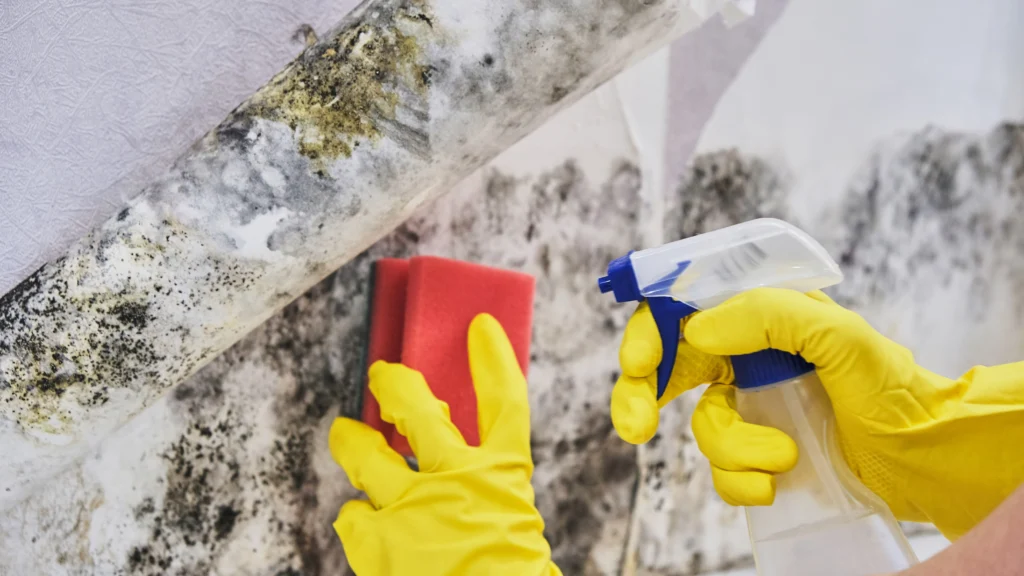
Why Mold Is a Common Problem in Iowa Falls Homes
Iowa Falls sits in a part of the state where humidity swings hard between seasons. Summers bring sticky, moisture-heavy air that seeps into basements and crawl spaces, while winter heating cycles create condensation on cold surfaces inside older homes. Add in a housing stock where a large share of properties were built decades before modern moisture barriers and vapor sealing became standard, and you get a near-perfect environment for mold to establish itself in places homeowners rarely check.
A few local factors that consistently show up in remediation jobs around Iowa Falls and greater Hardin County:
- Basements with stone or block foundations that were never sealed against groundwater seepage
- Homes relying on sump pumps that fail during heavy spring rain, allowing standing water to sit for days
- Bathrooms without proper exhaust ventilation, especially in homes built before code updates required it
- Attic spaces with inadequate insulation, leading to condensation buildup during Iowa’s cold winters
- Flood-adjacent properties near the Iowa River that have experienced past water intrusion
None of these issues are unusual, and none of them mean a home is poorly built. They’re simply the reality of Iowa’s climate combined with an aging housing inventory, which is why local, climate-aware remediation matters more than a one-size-fits-all national approach.
Signs You Need Professional Mold Remediation
Not every stain is mold, and not every mold problem needs a professional crew. But there are clear signals that it’s time to stop guessing and call in an expert.
- A persistent musty or earthy odor that doesn’t go away with cleaning or ventilation
- Visible discoloration on walls, ceilings, or flooring that spreads or returns after cleaning
- Recent water damage from a leak, flood, or plumbing failure that wasn’t fully dried within 24 to 48 hours
- Warped drywall, bubbling paint, or soft spots in flooring near known moisture sources
- Household members experiencing unexplained allergy symptoms, coughing, or respiratory irritation that improves when they leave the house
The Centers for Disease Control and Prevention notes that mold exposure can trigger allergic reactions, asthma flare-ups, and respiratory irritation in sensitive individuals, which is one reason remediation shouldn’t be delayed once a problem is confirmed. If you’re seeing more than one of these signs at once, it’s worth scheduling an inspection rather than waiting to see if it gets worse.
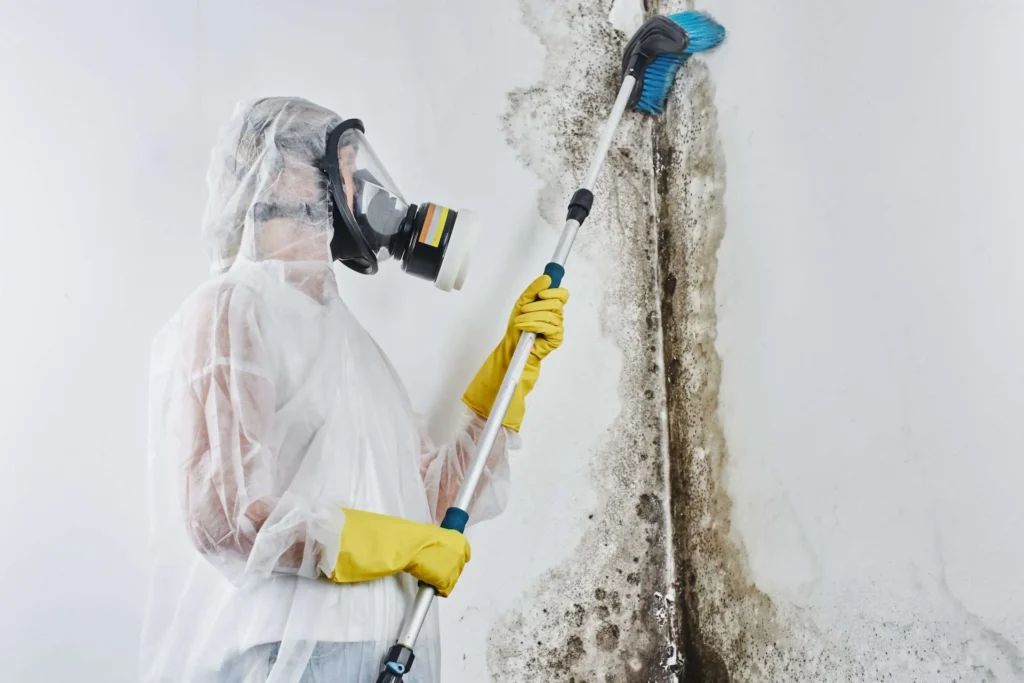
What Happens During a Professional Mold Inspection
A lot of homeowners hesitate to call because they don’t know what to expect. Here’s a realistic walkthrough of a typical in-home visit.
A technician starts with a visual inspection of the affected area along with adjacent rooms, since mold often travels further than the visible spot suggests. Moisture meters are used to check walls, subfloors, and framing for hidden dampness that wouldn’t be obvious to the eye. In many cases, air quality testing or surface sampling is recommended to confirm the type and concentration of mold present, particularly if the homeowner has health concerns or is preparing for an insurance claim.
From there, the technician identifies the root moisture source. This step matters more than people expect. Removing mold without fixing the leak, poor ventilation, or drainage issue that caused it is a temporary fix at best. A proper inspection ends with a written scope of work outlining what needs to be contained, removed, treated, and repaired, along with a cost estimate before any work begins.
This transparency is what separates a legitimate remediation company from a quick “spray and pray” operation. If a company can’t explain what caused the mold and how they plan to stop it from returning, that’s a red flag.
The Mold Remediation Process, Step by Step
Once an inspection confirms the scope of the problem, the actual remediation follows a fairly consistent process across the industry, though the scale changes depending on severity.
Containment comes first. Plastic sheeting and negative air pressure machines isolate the affected area so spores can’t travel to unaffected parts of the home during the work.
- Removal of contaminated materials follows. Porous materials like drywall, insulation, and carpet that have absorbed mold usually can’t be fully cleaned and need to be removed and replaced.
- Non-porous materials like tile, glass, and metal can typically be cleaned and treated in place.
- Cleaning and treatment of remaining surfaces uses antimicrobial and antifungal solutions designed to kill remaining spores and inhibit regrowth. HEPA vacuuming is used throughout to capture airborne particles that standard cleaning would miss.
- Drying and dehumidification bring moisture levels back to a safe range, since any leftover dampness undermines everything done up to this point.
- Repair and restoration replaces removed materials, from drywall to flooring to trim, returning the space to its pre-damage condition.
- Post-remediation verification confirms the job worked, often through a final visual inspection and sometimes a follow-up air quality test, especially when the initial testing showed elevated spore counts.
A small bathroom ceiling job might move through this entire process in a single day. A flooded basement with significant material loss can take a week or more. The process is the same either way; only the scale changes.
How Much Does Mold Remediation Cost?
This is the question almost everyone searching for mold remediation actually wants answered, so let’s be direct about it.
How much does mold remediation cost? Nationally, most homeowners spend somewhere between $1,500 and $6,000 for a typical remediation job, though small, contained jobs can run as low as $500 and severe whole-basement or flood-related jobs can climb past $10,000. The final number depends almost entirely on the size of the affected area, the type of surfaces involved, and how much material needs to be replaced rather than just cleaned.
What is mold remediation cost based on? Pricing generally scales with square footage, accessibility of the affected area, whether porous materials like drywall or carpet need full replacement, and whether the source of moisture requires separate repair work like sump pump replacement or foundation sealing.
How much does mold cleanup cost? For smaller, surface-level jobs, such as a bathroom ceiling or a small closet, cleanup costs often land between $500 and $1,500, since containment and material replacement needs are minimal.
How much does mold removal cost? For mid-sized jobs involving one or two rooms with moderate material replacement, expect a range of roughly $2,000 to $4,500, depending on how much drywall, insulation, or flooring needs to come out.
How much is mold remediation for a full basement or major flood recovery? These larger jobs, which involve extensive material removal, industrial drying equipment, and often structural repairs, typically range from $5,000 to $10,000 or more.
How much does it cost to get mold removed if it’s tied to a plumbing leak? In these cases, remediation costs are frequently bundled with water damage repair, and total costs often fall between $3,000 and $7,000 depending on how long the leak went undetected before discovery.
How much does it cost to remove mold from HVAC systems or ductwork? This specialized work usually adds $500 to $2,000 to a project, since duct cleaning requires different equipment than surface remediation.
How much does it cost to remediate mold when testing is included? Add roughly $300 to $600 for professional air quality or surface testing, both before and after remediation, if you want documented confirmation the job was successful.
The most reliable way to get an accurate number is a free, in-person inspection rather than a phone estimate, since square footage and material type change the price significantly from one home to the next.
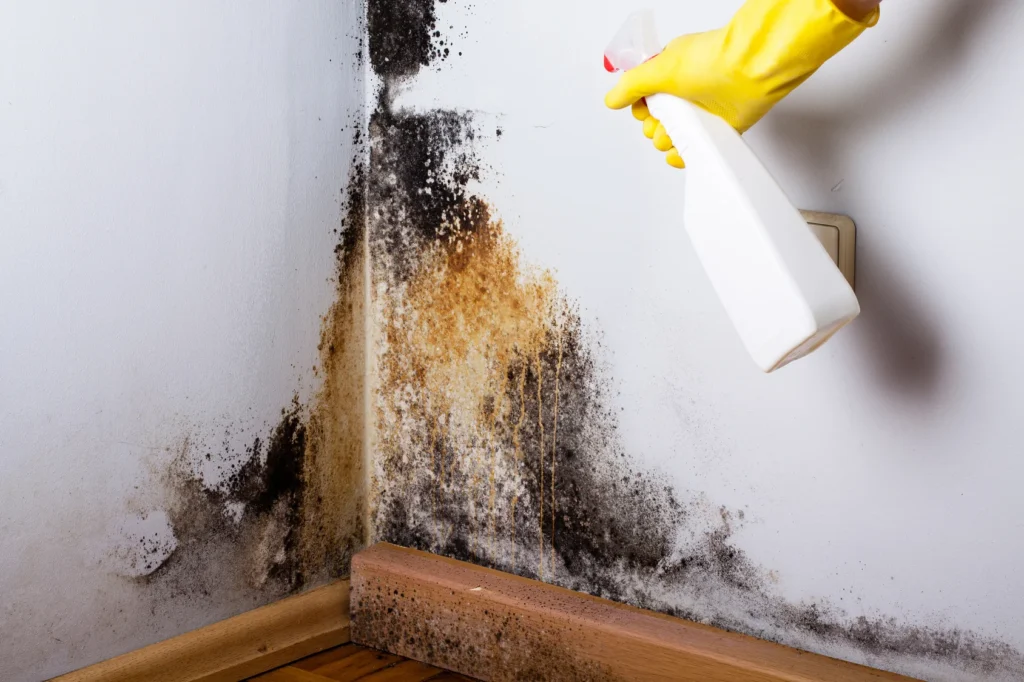
Choosing the Right Mold Remediation Company in Iowa Falls
Not every company advertising mold services follows the same standards. A few things worth checking before hiring anyone:
- Ask whether technicians are certified in mold remediation protocols and follow IICRC (Institute of Inspection, Cleaning and Restoration Certification) standards
- Confirm they provide a written scope of work and cost estimate before starting any demolition or removal
- Ask how they handle containment, since improper containment is the most common cause of mold spreading during a supposedly professional job.
- Check whether post-remediation verification testing is included or offered as an add-on.
- Look for local experience specifically, since a company familiar with Iowa Falls housing stock and climate patterns will spot issues a generic national franchise might miss
A trustworthy company won’t pressure you into same-day demolition without first explaining what they found and why. If the plan isn’t clear before work starts, it’s worth getting a second opinion.
Preventing Mold From Coming Back
Remediation solves the current problem, but prevention keeps it from becoming a repeat expense. A few habits make a real difference in Iowa Falls homes specifically:
Keep basement humidity below 50 percent using a dehumidifier during summer months, since Iowa’s humid season is the biggest recurring trigger for basement mold. Inspect sump pumps annually before spring rains arrive, since pump failure during heavy storms is one of the most common causes of repeat remediation calls in this area.
Make sure bathroom and kitchen exhaust fans vent to the outside, not into the attic, where trapped moisture just creates a new problem in a new location. Address roof leaks and gutter issues promptly, since slow leaks are often what turn a small attic mold spot into a full remediation job. Seal foundation cracks before winter, since freeze-thaw cycles widen small cracks into larger points of water entry by spring.
None of these steps are expensive compared to the cost of a full remediation job, which is exactly why they’re worth building into a regular home maintenance routine.
Conclusion
Mold problems in Iowa Falls homes are common, but they’re rarely as complicated to solve as homeowners fear once the process is broken down. Understanding what remediation actually involves, what a fair cost range looks like, and what separates a thorough contractor from a rushed one puts you in a much stronger position, whether you’re dealing with a small bathroom spot or recovering from a basement flood.
FAQ’s
How much does mold remediation cost?
Most homeowners pay between $1,500 and $6,000, depending on the size of the affected area and how much material needs replacing. Small jobs can run under $1,000, while severe basement or flood damage can exceed $10,000. A free in-person inspection gives the most accurate number.
What is mold remediation?
Mold remediation is the professional process of identifying the moisture source, containing the affected area, removing contaminated materials, treating remaining surfaces, and verifying the space is clean. It’s more thorough than simply wiping mold off a surface.
How much does mold cleanup cost for a small area?
Small, contained mold problems like a bathroom ceiling spot typically cost between $500 and $1,500, since minimal containment and material replacement are needed compared to larger jobs.
How much does mold removal cost for a whole room?
Mid-sized jobs involving one or two rooms with moderate drywall or flooring replacement usually range from $2,000 to $4,500, depending on the extent of material damage.
Is mold remediation covered by homeowners insurance?
Coverage depends on the cause. Mold from a sudden, covered event like a burst pipe is often included, while mold from long-term neglect or gradual leaks typically isn’t. Check your specific policy or ask your adjuster directly.
How long does mold remediation take?
Small jobs can be completed in a single day, while larger basement or flood-related remediation projects can take a week or more, particularly when structural drying and material replacement are involved.