
Discover why The Professional Touch is the leading provider of certified mold remediation services in Iowa Falls. Our comprehensive guide explores advanced moisture mapping, negative air pressure containment, HEPA filtration, and structural sanitization techniques designed to permanently eliminate toxic growth, improve indoor air quality, and protect your local real estate investment.
TLDR: Quick Takeaways for Iowa Falls Property Owners
- The Root Cause: Fungal outbreaks are always driven by hidden moisture anomalies, such as baseline shifts in humidity, hidden pipe fractures, or poor attic ventilation.
- The Safety Standard: Professional intervention relies on high-efficiency particulate air (HEPA) filtration and negative pressure containment to prevent thousands of microscopic spores from spreading into clean zones.
- Porous vs. Non-Porous: Hard, non-porous structural elements can be thoroughly sanitized, whereas deeply contaminated porous materials like drywall or insulation require controlled removal.
- Permanent Prevention: True remediation is never complete without fixing the original water source and regulating indoor relative humidity between 30% and 50%.
Finding fungal growth within the residential or commercial space is an issue that demands immediate, quick and decisive actions. Alongside the obvious physical damage, along with the odours which are sour and unpleasant, growing microbes are a serious danger to the integrity of structures and the health of indoor air. In Hardin County, where extreme seasonal transitions bring humid summers and freezing winters, indoor spaces are uniquely vulnerable to hidden moisture accumulation. When microscopic spores find a consistent water source, they can establish thriving colonies within 24 to 48 hours, quietly feeding on organic building materials like wood framing, ceiling tiles, and drywall.
If you attempt to deal with a major issue with common household cleaners or commercial remedies often backfires. If you don’t properly contain the problem, the DIY clean-up can disrupt the established colonies, which causes thousands of spores to go airborne and to spread through your cooling and heating equipment. Partnering with professionals for mold remediation in Iowa Falls ensures the issue is completely contained and eradicated at the root. Utilizing industrial-grade equipment as well as adhering to scientific confinement procedures, the Professional Touch restores indoor safety and protects the structure’s foundation, and safeguards your property investment.
Structural Preservation: Protecting Your Property Investment
A well-constructed indoor environmental control plan is essential to protect the investment you make in real estate. It will ensure the safety of buildings and ensure an environment that is safe for the people who live there.
The Environmental Dynamics of Hardin County Fungal Outbreaks
The growth of fungal spores cannot occur in the absence of. It requires a certain mix of humidity along with ambient temperature and an organic food source. Understanding how these components interact within the local environment is the first step toward long-term recovery.
Managing Local Indoor Climate Variations
The changing conditions of the climate across Iowa create unique challenges to ensure a comfortable humidity indoors. In the summer’s hot and humid seasons, cooling equipment is often overworked when they are not properly sized or has inadequate capacity to remove moisture. Humidity that is stagnant could easily gather in low levels and crawlspaces. In contrast, the cold winter season prompts homeowners to encase their homes tightly in order to keep warmth, and in the process traps internal moisture that is derived due to bathing, cooking, and heating equipment inside and causes massive condensation on exterior walls and windows.
Pinpointing Common Sources of Water Intrusion
- Sub-Surface Hydrostatic Pressure: Properties located close to the Iowa River or built over large water tables typically experience the water seeping into the porous concrete basement walls that are porous and floors.
- Stealthy Plumbing Anomalies: Pinhole leaks that are not visible in wall cavities or underneath bathroom fixtures could soak up the surrounding insulation and drywall for several months before they show visible stains.
- Attic Ventilation Deficiencies: If moist, warm indoor air is released into an attic that has not been properly vented throughout winter, it impacts the cold decking of roofs and causes widespread accumulation of frost that then reverts to a widespread water issue in the springtime.
The Scientific Framework of Professional Structural Remediation
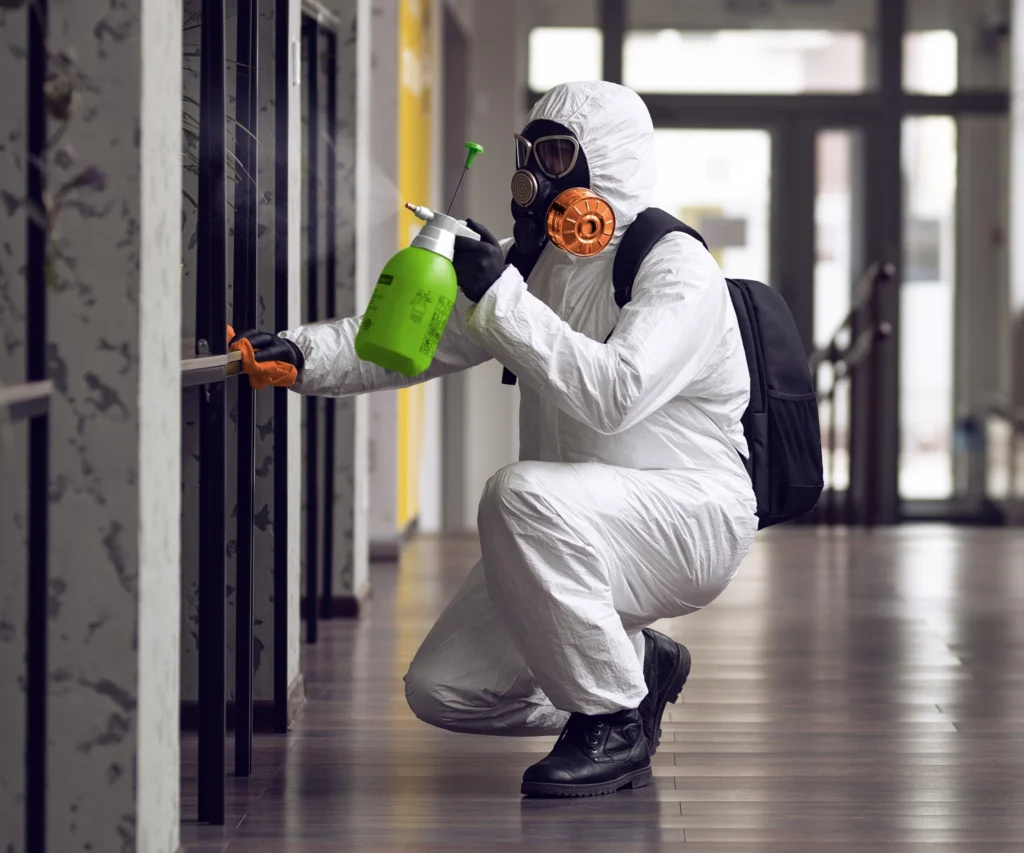
An organized, thorough procedure is crucial to guarantee that any fungal clean-up can be both secure and long-lasting. Modern-day property maintenance relies on the established protocols for environmental protection for cleaning infected areas without cross-contaminating adjoining areas.
- Moisture Inspection & Mapping: The technicians find hidden water dynamics by using digital and infrared scanners.
- Negative Pressure Isolation: Physical partitions block airborne particles from getting into indoor air-clean zones.
- Controlled Material Abatement: Structures that are not salvageable are removed and stored in a bag inside a container.
- HEPA Remediation & Sanitization: Biocides and special vacuums completely get rid of microscopic structural roots.
Advanced Moisture Mapping and Thermal Imaging
Before any single bit of drywall is removed, professionals must map out the complete physical limits of moisture penetration. The use of non-invasive infrared cameras enables professionals to see temperature fluctuations within walls and pinpoint concealed water pockets inaccessible to the naked eye. The data can be cross-referenced to water meters for structural dampness to define an exact perimeter of the cleaning area. This ensures that each trace of moisture is identified.
Establishing Robust Negative Pressure Isolation
To stop the unintentional transfer of airborne contaminants to healthy living spaces or workplaces, the affected area should be sealed completely from other areas of the structure.
- Physical Polyethylene Barriers: The heavy-duty plastic sheeting of 6 mil is used for the construction of air-tight wall-like containment around the working area, securing the windows, doors and open entryways to the architectural area.
- Mechanical Air Filtration Devices: Industrial air scrubbers that are equipped with high-efficiency particulate (HEPA) filters are embedded in the containment zone, constantly drawing air from the room and exchanging it outside in a safe manner.
- Maintaining Negative Pressure: In the process of continuously exchanging the filtered air in the system, a constant vacuum remains within the confinement zone. This ensures the spores that are borne by air are trapped in the filtration process instead of escaping to common spaces.
Differentiating Material Care: Porous vs. Non-Porous Elements
The different building components respond differently in response to the presence of fungal contaminants. In order to effectively treat them, it involves adjusting sanitization methods for the particular type of material.
Structural Salvage of Hard, Non-Porous Materials
Materials that are solid, like concrete-cast foundation walls and structural steel studs, massive timber beams, commercial vinyl flooring and so on, don’t absorb water deep into their matrices. The structural density of these materials allows engineers to fully salvage them through a thorough physical cleaning. The crews employ a mixture of wire brushing, targeted sanding and HEPA vacuuming to get rid of the growth on surfaces, then the application of registered antimicrobial solutions to get rid of the remaining pathogens on surfaces.
Controlled Removal of Heavily Contaminated Porous Surfaces
Porous materials behave like sponges that allow fungal roots to weave into their pores as well as gaps, rendering complete sanitization difficult.
- Interior Gypsum Drywall: When drywall begins to absorb water and begins to show indications of structural rot inside, it must be cautiously removed, sealed in large bags for disposal that are within the containment area, and then properly disposed of.
- Fiberglass and Cellulose Insulation: Damp insulation is completely degraded in thermal R-value and acts as the perfect habitat for microbe colonies. This requires urgent removal and replacement.
- Carpeting and Fabric Underlayments: Since tightly-woven fabrics are able to hold fine particulates as well as moisture, the carpets that are affected by it need to be cleaned regularly in order to achieve a tidy and long-term outcome.
Long-Term Prevention: Mastering Moisture Control Protocols
Resolving the issue of a fungal infection involves more than just getting rid of the visible growth. environment conditions that allowed the fungal growth to occur need to be completely corrected.
Regulating Indoor Relative Humidity
Controlling the indoor relative humidity is the main defense against any potential fungal growth. Homeowners must aim to maintain indoor humidity levels between 30 to 50% by using a combination of commercial-grade dehumidifiers and appropriately configured HVAC systems. The installation of digital hygrometers in the lower floors, rooms with mechanical systems and crawlspaces will provide real-time monitoring, which allows you to spot water levels that are rising before they turn troublesome.
Enhancing Perimeter Drainage Profiles
- Correcting Soil Slopes: The ground surrounding the foundation is sloped away from your building with a slope of at least 6 inches above the first 10 feet to prevent rainwater from collecting against the walls of your basement.
- Optimizing Gutter Systems: Regularly clean your gutters and put in longer downspouts for rainwater from your roof at least 6 to 10 feet from the foundation line.
- Sump Pump Maintenance: Make sure to test the subsurface sump pump regularly, in particular, prior to the torrential spring rains. You should also think about installing a battery backup system to guarantee continuous functioning during unexpected power outages.
The Strategic Value of Securing Certified Structural Support
Engaging certified experts from The Professional Touch is an investment that will protect your home’s longevity, protect the occupant’s health, and provide total assurance of peace of mind.
Why Expert Remediation Outperforms DIY Attempts
- Advanced Equipment Access: Professional teams use specialized, advanced air movers with high volume, powerful LGR dehumidifiers and HEPA filtering systems, which cannot be rented through normal equipment rental.
- Comprehensive Environmental Insurance: Contractors who are certified carry specialized Environmental and Pollution liability insurance, guaranteeing homeowners against unanticipated costs arising from complex cleanups.
- Definitive Clearances: Reputable remediation groups work with professionals from independent indoor air quality experts for thorough visual examinations and verification of post-remediation clearance to ensure that your indoor air is clean and safe.
In combining routine maintenance with the latest environmental technology, Iowa Falls property owners will be able to keep their homes healthy and in resilient environments that can withstand water challenges throughout the year.
Conclusion
Partnering with The Professional Touch ensures your property receives the highest benchmark of safety through specialized negative air isolation and industrial-grade HEPA sanitization. Prompt structural remediation not only neutralizes active fungal growth and musty odors but also safeguards your home or commercial space from long-term moisture deterioration. By relying on certified local experts to handle complex environmental containment, you ensure a completely safe, thorough, and lasting cleanup. Investing in professional moisture control is the single most effective way to protect your building’s structural framework and maintain pristine indoor air quality for your family or workforce.